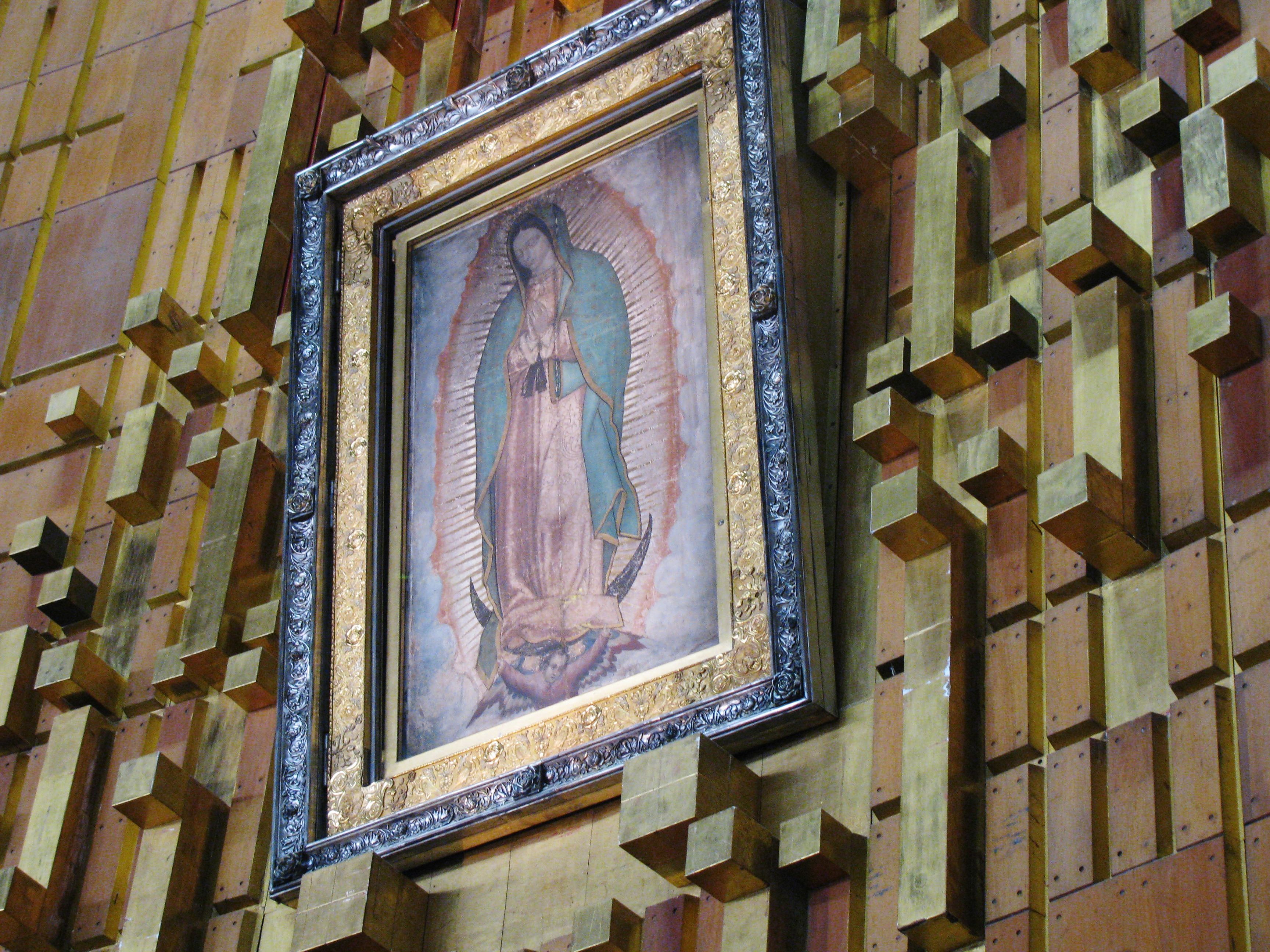
Guadalupe, Mexico
On December 9, 10, and 12 in 1531, Our Lady appeared to Juan Diego, an Aztec Indian in Guadalupe, Mexico. She came to offer faith and hope to the oppressed natives of Mexico and to reconcile them with their Spanish rulers. Upon ending her apparition with Juan, she left an imprint of her image on his tilma (cloak). Since this time, the tilma has been subject to extensive scientific testing. Upon examination, the following is found:
- The image is proven to not be painted by human hands.
- The image and fabric have miraculously lasted in the original condition for nearly 500 years.
- The weak cactus fiber, of which the tilma was made, should have decomposed within 15-20 years of being woven.
- No natural or animal mineral colorings, or paint, are found on the image.
- The image itself is iridescent, and cannot be produced by hand.
- Mary stands on a crescent moon, the same crescent moon that was in the sky on the day of her apparition.
- Mary's mantle is a constellation map, the same constellations that were in the sky as on the day of her apparition.
- The constellations tell the story of the Gospel with the arrangement of "Leo" in the womb of "Virgo."
- Our Lady's garment is a topographic map of the geographic location of her apparition.
- On Mary's neck is a small black cross, identifying her with the Catholic missionary priests.
- Over her womb on her dress is a four-petal flower—the Aztec symbol of life and divinity.
- In the image Mary is "clothed with the sun" with "the moon at her feet" as described in Revelation 12:1.
- A doctor once heard a heartbeat coming from the image when he placed a stethoscope over the womb.
- The eyes on the image have the refractory characteristics of human eyes.
- Mary's eyes, when examined through a microscope, reflect the images of the witnesses present at the tilma's unveiling, including Juan Diego and the bishop.
This event is thought to be responsible for the start of a dramatic conversion of the Mexican people to Catholicism. The tilma is on display in the Minor Basilica of Our Lady of Guadalupe church in Mexico City, Mexico. A photo of the tilma is seen here.